
Short Answer: For most Southeastern Wisconsin lawns, mulching leaves back into the turf with a mower is the best option, and it is also the cheapest and the best for your soil. Shredded leaf litter feeds the soil biology, adds organic matter to heavy clay, and disappears within weeks. The exceptions are real though: heavy leaf volume that mats and blocks light, thick waxy leaves that break down slowly, diseased foliage, and freshly seeded areas all call for removal instead. The wrong choice is leaving whole leaves to sit in a wet layer over winter, which is how you get matted, smothered turf and snow mold in spring.
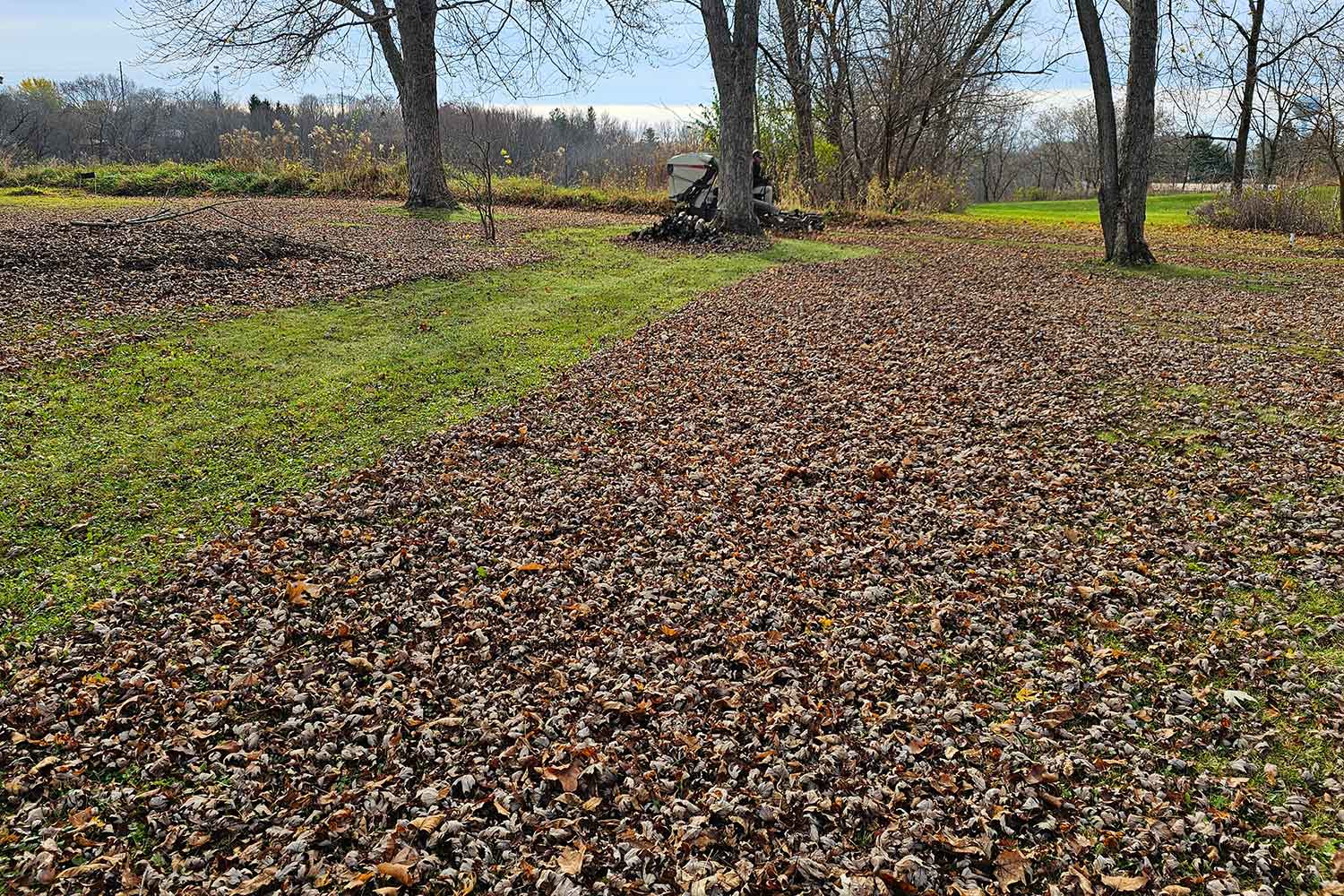
Leaf season in Lake Country runs from late September into November, and it produces one of the more polarized debates in lawn care. One camp says leaves are free fertilizer and you should never bag them. The other says leaves smother grass and should always come off.
Both are right some of the time, which is why the honest answer is a decision rule rather than a slogan. Here is how we think about it on Wisconsin properties.
Leaves are one of the highest-quality soil amendments available, and they arrive at your property for free. A tree spends a season pulling minerals up from several feet down and packaging them into leaf tissue. Shredding that tissue and returning it to the lawn surface puts those minerals back into the top few inches where grass roots live.
Three specific benefits matter on our soils. Shredded leaf litter feeds the fungal and bacterial populations that drive nutrient cycling, and September through November is when that biology is actively building for winter. It adds organic matter to clay-heavy soil, which improves structure and water infiltration over years of repetition. And it reduces the fertility you need to buy, because you are recycling nutrients instead of exporting them in bags.
There is one more benefit worth naming. Repeated research on mulching leaves into turf shows suppression of some weed seed germination in spring, because a shredded leaf layer interferes with the light and soil contact that weed seed needs. That fits an organic-based program exactly: an ordinary maintenance choice doing part of the weed control job.
Mulching works when the leaves get shredded small enough to fall through the turf canopy to the soil surface. It fails when it just chops them into large flakes that sit on top.
The practical approach is to mow more often during leaf fall rather than waiting for a big pile. Mowing over a light scatter of leaves once or twice a week through October handles the volume in passes small enough to shred well. A mulching blade helps considerably, and a sharp blade of any kind helps more than a dull mulching blade.
Keep the deck at your normal fall height and go over heavier areas twice, at right angles on the second pass. You want the finished result to look like the lawn has a faint dusting of leaf confetti, not a layer of leaf pieces.
The test is simple: after mowing, you should be able to see grass. If you see mostly leaf, you have exceeded what mulching can handle in that pass.
Properties with mature oaks, maples, or ash in Oconomowoc, Delafield, and Elm Grove can drop far more leaf than a lawn can take. If the layer is deep enough that mowing twice still leaves a mat, that leaf needs to come off. A wet mat over winter blocks light, holds moisture against the crowns, and creates ideal conditions for snow mold.
Not all leaves decompose at the same rate. Oak and some other thick, waxy leaves break down considerably more slowly than maple, ash, or birch. A property that is mostly oak often needs a mix: mulch what the lawn can absorb, remove the rest.
If a tree or shrub had a fungal issue during the season, its leaves carry that inoculum. Mulching them back into the lawn or beds keeps the problem on site for next year. Those leaves should be removed.
Any area you aerated and overseeded in September needs light kept on it. New seedlings have no reserves and cannot push through leaf cover. Keep those areas clear with a leaf blower or light raking rather than waiting to mulch them in.
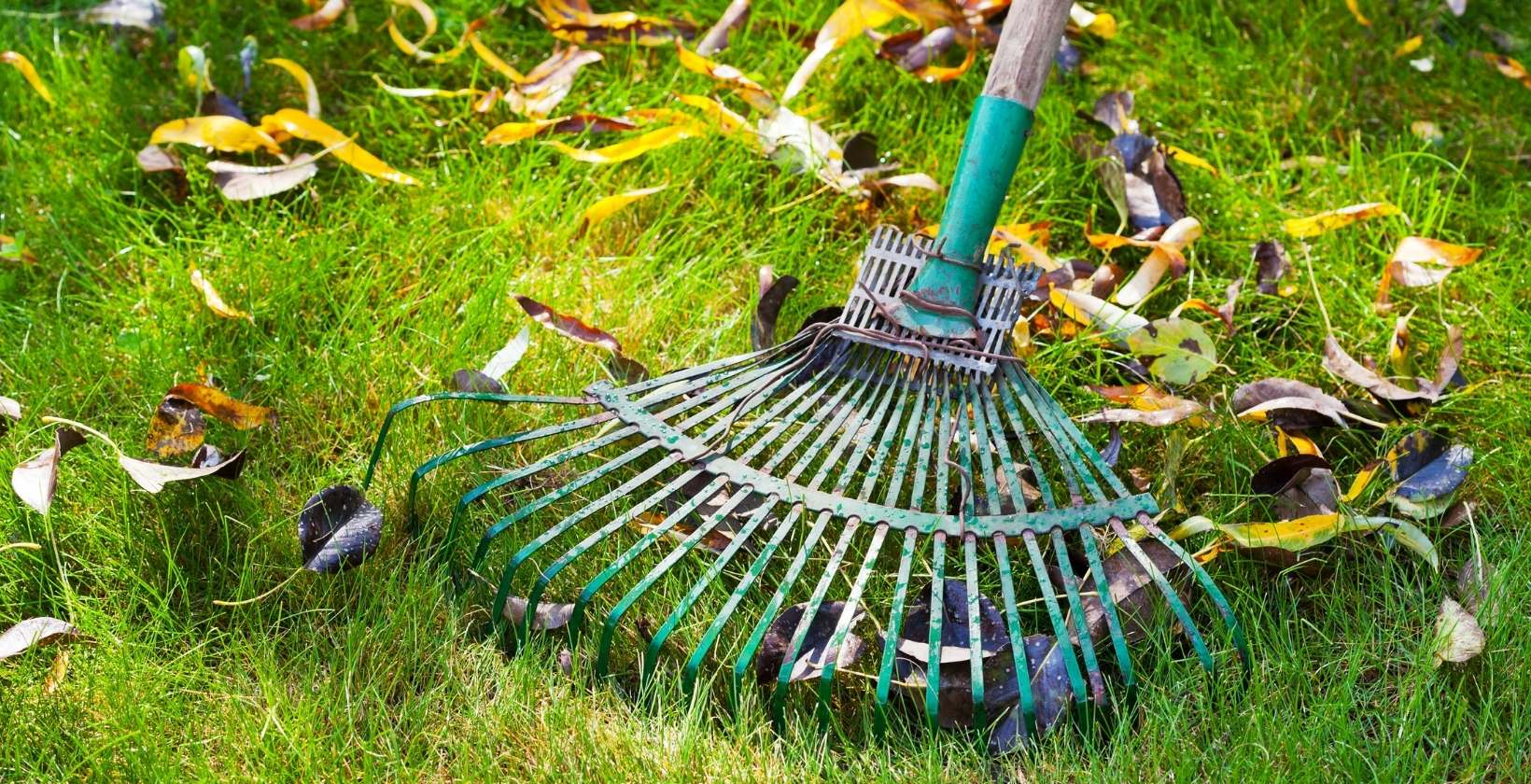
Removal does not have to mean sending organic matter to the curb. Leaves you take off the lawn are still valuable.
Shredded leaves make excellent mulch for perennial beds and around shrubs, where they insulate roots through winter and break down into the bed over the season. They are also one of the best carbon sources for a compost pile, balancing the nitrogen-rich kitchen and garden material that most home piles have too much of. A pile of shredded leaves left alone for a year produces leaf mold, which is one of the best soil conditioners you can get.
Exporting all of it in bags is the only option that gives you nothing back.
Leaf management in Wisconsin is not one event. Trees do not drop on the same schedule, and a single big cleanup in early November usually means the lawn spent five weeks under cover before anyone touched it.
The better pattern is ongoing: mulch during regular mowing through October, remove the heavy accumulations as they build, and do a final clearing before the first lasting snow. Going into winter, the lawn should be clear of matted leaf, cut a little shorter than summer height, and free of anything holding moisture against the crowns.
Leaf mulching is one of the clearest illustrations of what organic-based lawn care means in practice. Nothing about it is exotic. It is a mowing decision that happens to feed the soil, reduce purchased inputs, suppress some spring weed germination, and improve clay structure over time.
That is the pattern we look for throughout a program: choices that solve the immediate problem while making the lawn less dependent on intervention next season. A lawn that has had leaves mulched into it for five years has measurably better soil than one that has had them hauled away, and better soil is the whole point.
No. Thatch is built from slow-decomposing root and stem tissue, not leaf litter. Shredded leaves break down quickly and, if anything, support the biology that decomposes existing thatch.
As a working rule, if you can still see grass through the leaves, mowing will handle it. If the lawn is fully covered, take some off first and then mulch the remainder.
A dedicated mulching mower does the job better, but a standard rotary mower with a sharp blade and more frequent passes works fine on most properties. Blade sharpness matters more than blade design.
Leave them, in most cases. A leaf layer in beds insulates perennial roots through a Wisconsin winter and breaks down into the soil. Shredding first helps them stay put and decompose faster. The exception is diseased foliage, which should come out.
Mulch what the lawn can absorb, remove what it cannot, keep newly seeded areas clear, and never let a wet leaf mat sit on turf over winter. Mow more often rather than harder during leaf fall, and put whatever you remove into beds or a compost pile instead of the curb. Done this way, leaf season stops being a chore that costs you and becomes the largest free soil amendment your property produces all year.
Want leaf cleanup handled on a property that has more leaf than a mower can absorb?
Request a free quote at begreen.pro/get-a-quote
(262) 361-4034
Live greener. Grow better. Enjoy more.
Whether it’s your lawn, trees, shrubs, or pest issues – we’re ready to help you with Eco-friendly solutions. No matter what season.